
Meeting in VMU with international group of students and teachers
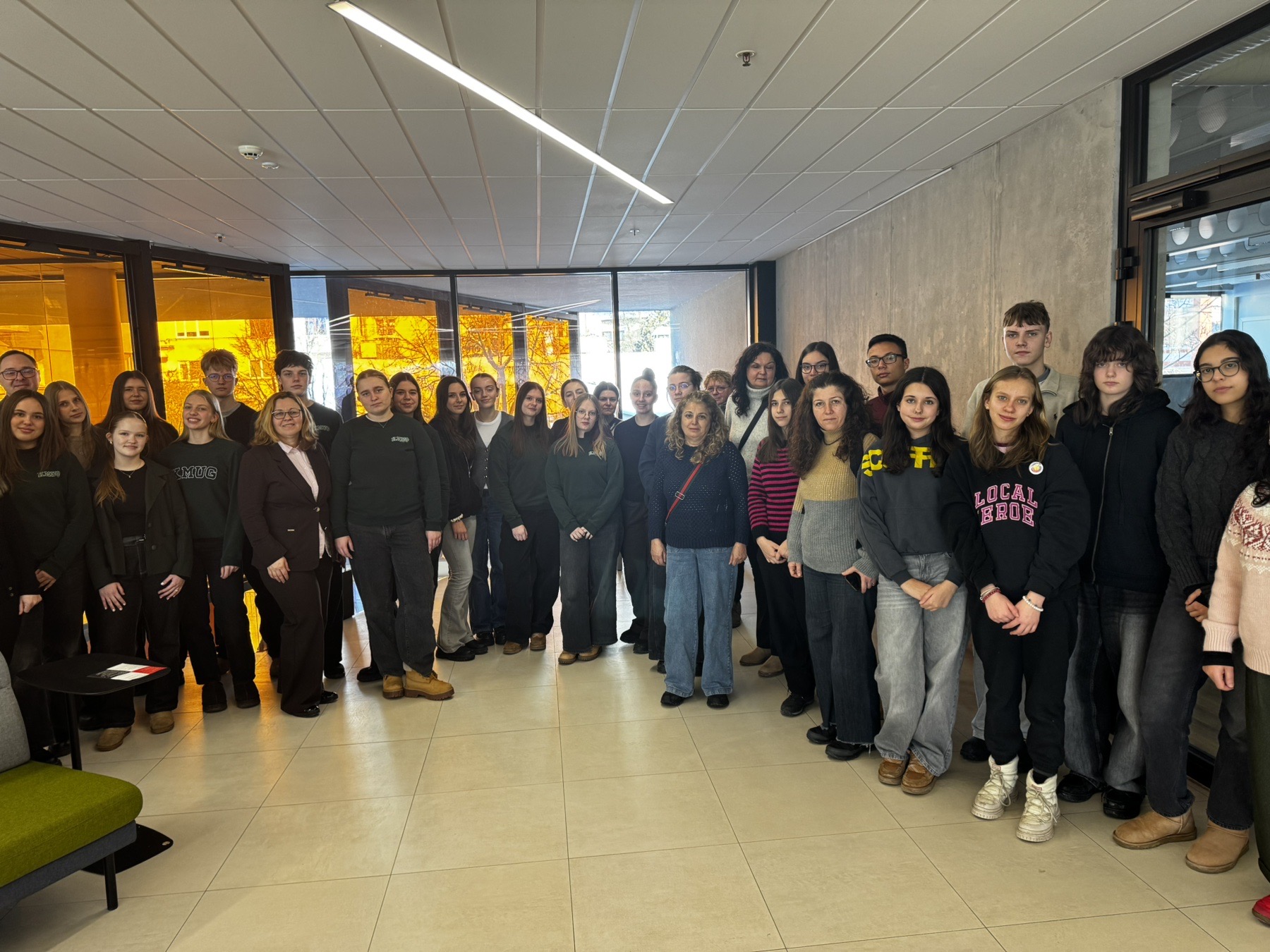
This week, VDU ISI welcomed students and teachers from Kaunas Maironio University Gymnasium and participants of their international Erasmus+ mobility project “From Diversity to Unity: Strengthening International Relations through Peer Learning.” They were welcomed by the deputy director of VDU ISI, Assoc. prof. dr. Estela Daukšienė, who agreed to share her thoughts about the meeting and its novel approach.
What kind of guests visited VMU?
Kaunas Maironio University Gymnasium is participating in the international Erasmus+ mobility project “From Diversity to Unity: Strengthening International Relations through Peer Learning.” Students and teachers from Poland, Romania, and Turkey have come for a week of project activities. Twenty-four students and nine teachers are participating in the project. The main theme of the project is unity through diversity, with a special focus on gender equality. During the activities, students participate in seminars, discussions, creative workshops, and educational trips around Lithuania. The project promotes intercultural communication, tolerance, and active cooperation between young people from different countries. Guests live with host families, which gives them the opportunity to get to know Lithuanian culture, traditions, and everyday life more closely. Such projects not only strengthen international friendship and openness, but also significantly contribute to the development of students’ social, linguistic, and civic skills and to the formation of a common European identity.
What was special about the meeting and the guests’ visit to VMU?
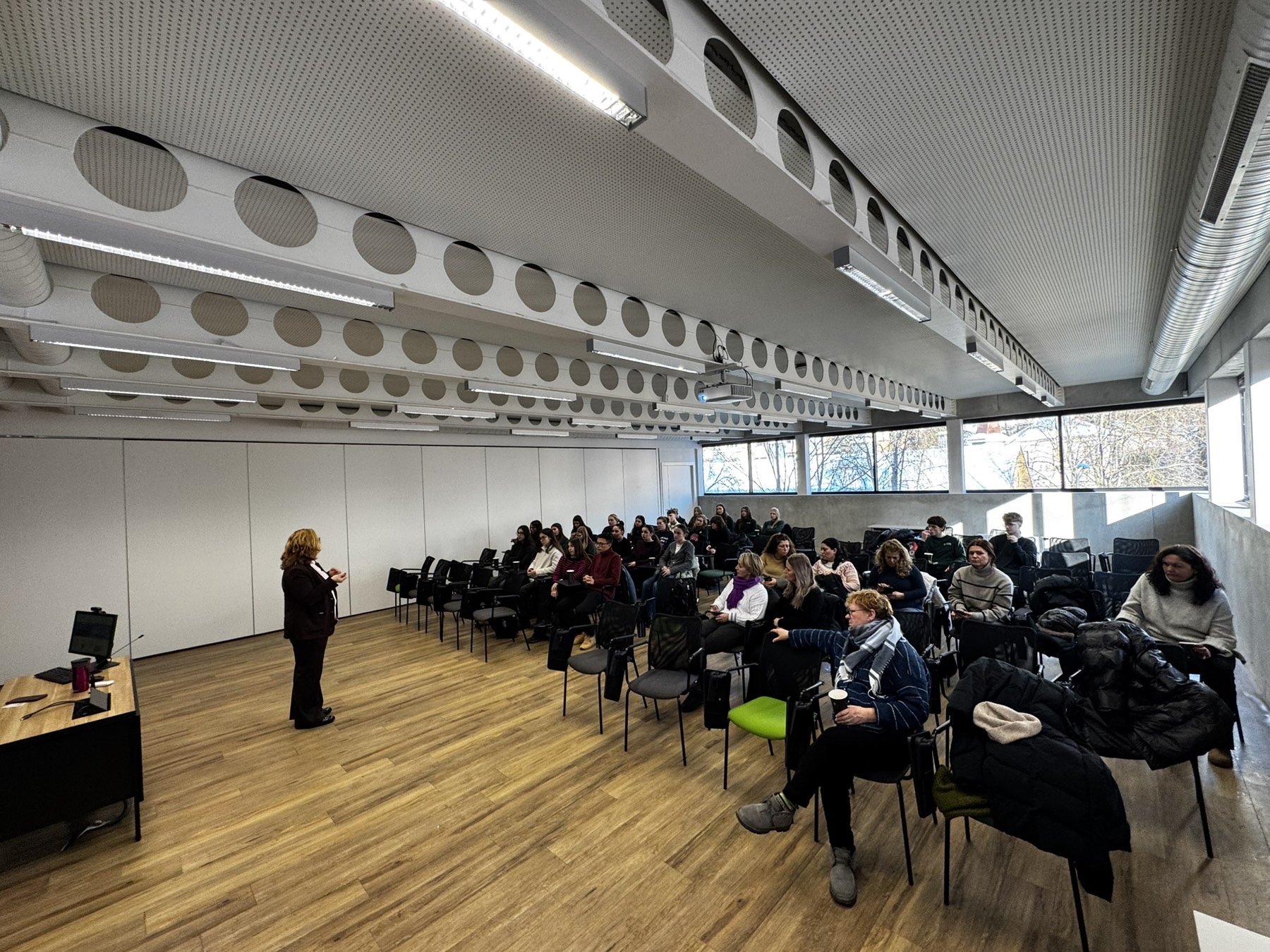
VDU often welcomes project partners from various countries, universities, and schools. However, this meeting was somewhat different, as its purpose was not only to share information about VDU and discuss career opportunities, but also to allow students to prepare questions in advance and subsequently prepare their reports, which we are eager to see later.
So, after a short presentation about the university and my areas of activity, which include teaching at VMU Education Academy, consulting lecturers and students, testing and implementing innovations at ISI, collaborating with the LieDM association (where I have been actively involved for 15 years) and EDEN DLE (where I am a Management board member), I spent an hour answering the students’ questions.
It may sound strange, but I sincerely wish everyone could have such an experience. It was an opportunity to reflect on what you do, the values you follow, what you have achieved (without boasting, but reflecting), what you still strive for, and what advice you would give to others. It was great to hear the students’ profound, sometimes philosophical questions, and to see and admire young people and their desire to learn from others. The questions were very diverse, ranging from the structure of the university and the importance of study opportunities to student involvement in events and university departments, to personal career paths, discussions about the future of education, artificial intelligence, and the skills students will need in the future.
The most interesting questions were:
- As a lecturer advancing your career, which is more important: courage or patience?
- What was the biggest obstacle in your career?
- How do your university’s students stand out from others after graduation?
- How many international students study at your university?
- Are courses taught in English?
- Which programs are most popular?
- How did you begin your career? What is the most important thing in pursuing a career?
- How do you envision the future of education?
- What should teachers teach students in the digital age? How can teachers determine what students will need in the future?
Since the project is related to equal opportunities, there were questions about whether I encounter discrimination in my field, how I would feel if a male colleague with similar qualifications applied for the same position, whether that would intimidate me, and how we ensure equal opportunities at the university.
It’s great that there are projects like this that create extraordinary experiences for students, teachers, and those around them (in this case, university lecturers :). We recommend that other lecturers also reflect on how they got to where they are and how they achieved what they have achieved.